“Every artwork carries a voice. The curator helps us hear it.”
Curatorial Note: Bridging Beauty and Being
Curatorial Note By Jeeshnu Gupta
In Gupta’s vision, art exists at the threshold between concealment and revelation. As he has noted, ‘darkness holds, but it does not reveal, light reveals the path, awakens the eye, and reflects the hidden order within the void’. This poetic dictum – like an Upanishadic koan sets the tone: every canvas is at once an altar of mystery and a path of insight. In other words, Gupta’s art is conceived not as mere objects, but as portals. Each form becomes a threshold, inviting the viewer to cross from the material realm into something deeper. The effect is like encountering a temple at dusk, where ordinary walls dissolve into the glow of what they contain within.
Gupta’s self-styled Libre Essence idiom knits together the timeless and the timely. Every stroke is invested with purpose. He writes of each brushstroke becoming “a mantra” – so that seeing an Installation is like reciting a silent hymn. In this vein, each mark on canvas “carries a whisper of silence, a surge of emotion, & a bridge of connection”. His spiritual installation dwells at the meeting point of tradition and modernity. They draw on classical symbols yet speak in a contemporary idiom. The result is a kind of dream-map or soulscape, a richly layered tapestry that feels both archaic and urgently present. In viewing them, one feels, as in the best visionary art, that mythic consciousness and ordinary life have all been woven together.
Far from being purely formal exercises, Gupta’s pieces are crafted as experiences of awakening. He describes art as a journey “within and without”. Inward toward unseen realms of spirit. Outward as a mirror for the viewer’s own story. In practice this means an installation ceases to simply be passive decoration and becomes a living invitation. The artist speaks of each work striving to “bridge the personal with the collective”, finding a harmony between private insight and shared human feeling. In this way the art is unfinished until it encounters an observer, much like Schrondinger’s Cat. A canvas is complete only when it stirs something, a pause, a reflection, an uplift, in the heart of the beholder. Encountering Gupta’s work is thus framed as a dialogue: as he puts it, true art “begins a new life in the eyes and hearts of those who encounter it”, waking the soul rather than merely pleasing the retina.
Central to Gupta’s method is the idea that the creative act is a kind of spiritual practice. He explicitly equates “spirituality” with “aesthetics”, asserting that beauty is not superficial but the breath of something sacred. He insists that art is born not of mere skill but of an open heart. In his words, it is “not made by hand alone, but by the soul in surrender”. In other words, every work is intended as a kind of prayer. According to his own account, each piece begins as an inner spark and is nurtured by devotion until “the artwork begins to breathe, taking on a life of its own”. The finished canvases thus exude an unmistakable sense of intention. Gupta says they are “infused with intention and artistry, embodying vision, emotion, and timeless beauty”. In practice, each Installation feels charged, one may sense the quiet meditation in the layering of colours, the latent energy in an Installation. In their quiet way, each form seems to pulse with the rhythm of devotion, like a silent mantra folded into pigment.
Ultimately, Gupta’s oeuvre functions as a living bridge between the concrete and the cosmic. He often calls himself a “spiritual architect” who configures light and form to uplift spaces. His large-scale installations literally reconfigure environments into wells of vitality. His work can transform a space into a “goldmine of positive energy.” In this sense, Gupta’s art is practical magic: installations that double as talismans, objects that consecrate the everyday. The result is at once intellectual and ineffable. The Art Installations have the clarity of concept but the effect of a vision quest. Each form is grounded in material beauty, sumptuous hues, graceful lines, and tangible texture. Yet it points beyond itself. Walking through his galleries or sitting before his work, one is reminded of a Sanskrit verse: the visible world is only the limb of something invisible.
By framing his entire practice as a bridge from matter to meaning, Gupta blurs the usual boundaries of the “Physical Reality”. Art becomes devotion, not decoration. Viewers are reminded, in the manner of the Upanishads, that the finite can be the door to the infinite. In the end, Gupta’s spiritual art stands as an invitation: to consider each work as a living scripture & each room as a shrine. His legacy is a whispered challenge to perceive beauty not simply with the eyes, but with the very soul it was meant to awaken


About the Curator
Jeeshnu Gupta, Curator and Head of business at G-ART, brings a discerning eye for contemporary expression and spiritual depth. His curatorial practice bridges aesthetic sensitivity with thoughtful interpretation, enriching the viewer’s journey into the Libre Essence universe.
With a grounding from Delhi University, Jeeshnu melds education and experience to guide meaningful curation, bridging aesthetics and conscious expression.
Jeeshnu’s curatorial work — informed by a global sensibility and rooted in introspective art practices — offers nuanced perspectives that enrich the viewer’s engagement. Under his curatorship, every artwork is presented not just as a visual entity, but as an invitation to inner dialogue and resonance.
“Curated with intention. Viewed with awareness."
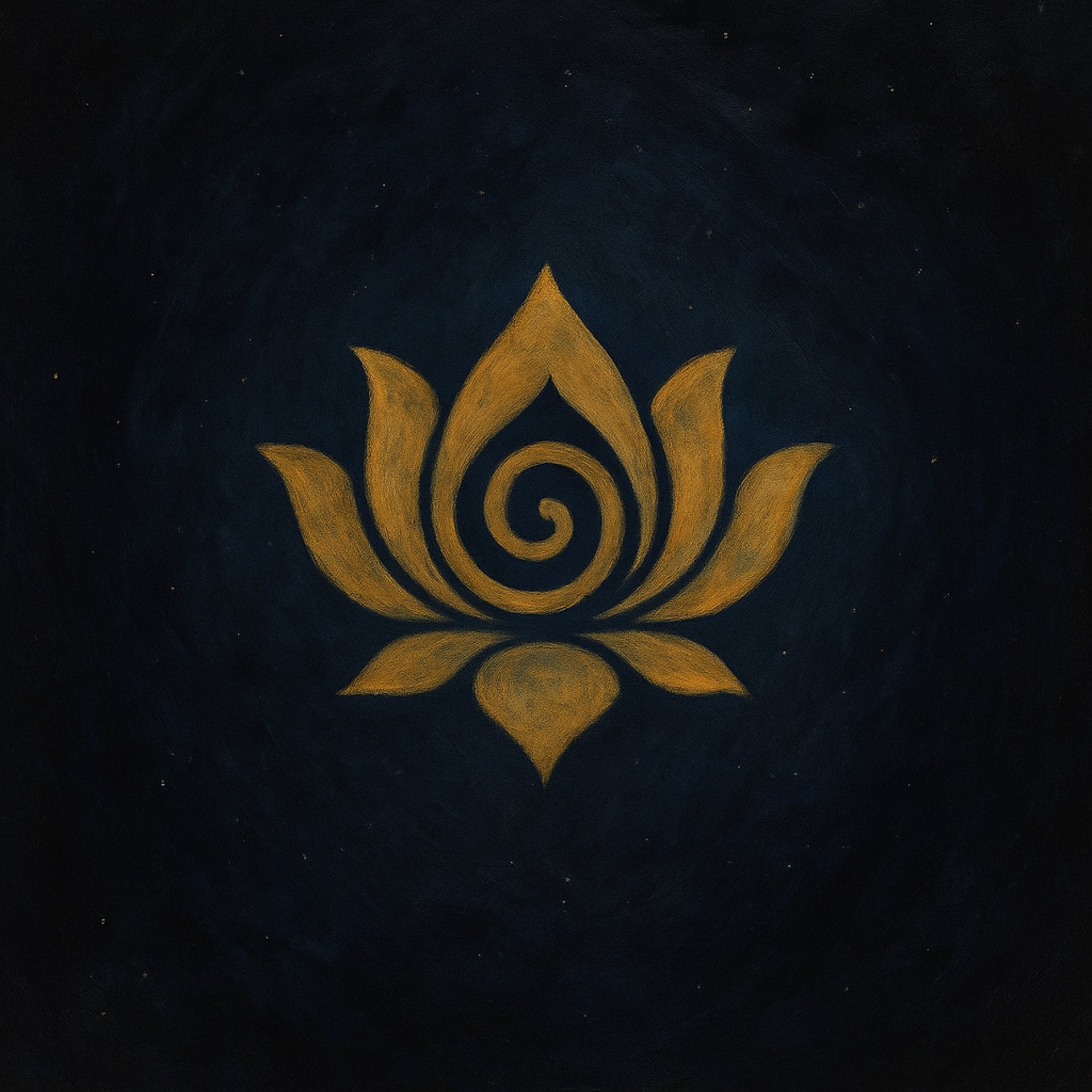
Divine Artworks for Your Collection
“Unique sculptures and paintings crafted in diverse mediums — from canvas and murals to reliefs and stonework. Each creation is infused with intention and artistry, designed to embody vision, emotion, and timeless beauty.”
Contact
contact@anuragkgupta.com
© 2025. All rights reserved.