01 / Artistic proposition
One practice. Multiple material expressions.
The trajectory is not a sequence of disconnected styles. It is an expanding enquiry into how form can hold memory, symbolic meaning, perception and states of becoming.
Anuragk Gupta’s work has moved between observation-led painting, relief, sculpture, commissioned environments and abstraction. Across these changes, the practice returns to the relationship between the visible and the unseen: how an image can carry an experience that is psychological, cultural, contemplative or metaphysical without reducing it to illustration.
“The image is not the conclusion of the enquiry. It is the place where the enquiry becomes visible.”
Libre Essence names the current, sustained development of this language. Spirals, layered fields, rhythm and colour become structural elements through which the artist considers consciousness, continuity, silence and transformation.
02 / Historical development
Four movements in an evolving visual language
The following periods provide a curatorial reading of the practice. They are interpretive groupings rather than rigid stylistic boundaries; individual works and their catalogue records remain the primary reference for dates, media and dimensions.
1988—1997
Observation and foundations
Early drawing and painting establish a grounding in observation, figure, emotional realism and material experimentation. Portraiture, symbolic expression and studies of human experience form the technical and visual foundations for later departures.
1998—2005
Material and spatial expansion
The practice extends beyond the picture plane into architectural relief, sculpture, public installations and commissioned environments. Scale, texture and the relationship between artwork and place become increasingly important.
2006—2015
Identity, emotion and symbolic presence
Figurative, narrative and landscape-based work deepens the relationship between inner feeling and visual atmosphere. Symbolic and metaphysical concerns become more pronounced while the work remains connected to lived observation and cultural memory.
2016—Present
Libre Essence and Spiral Ontology
Abstraction becomes a sustained philosophical enquiry. Spiral structures, layered movement and contemplative colour relationships form a language concerned with consciousness, time, vibration and transformation.
03 / Selected works
Read the trajectory through the work
A small group of catalogue works offers an entry into the changing scale, material vocabulary and conceptual direction of the practice.
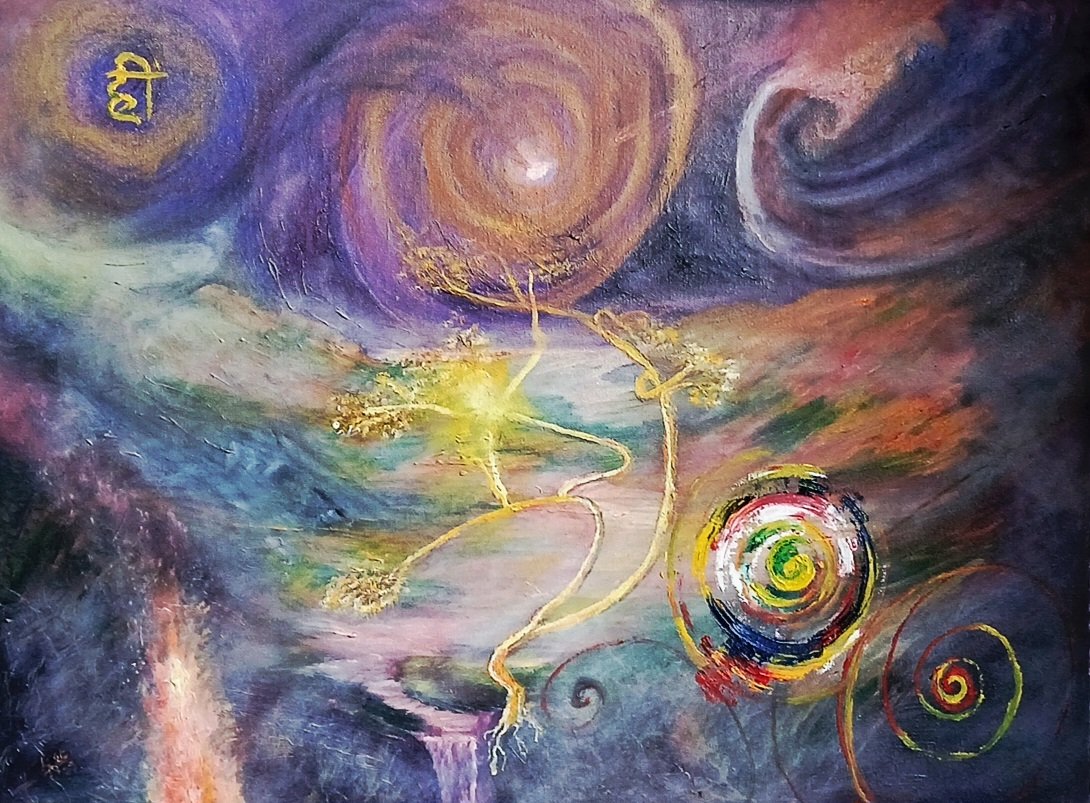
Pulse of the Earth
2025 · Oil on canvas · 18 × 24 in
Catalogue record: LE-2026-020 · Listed as collected
A study in rhythm and organic energy, connecting the material surface to a larger sense of living systems.
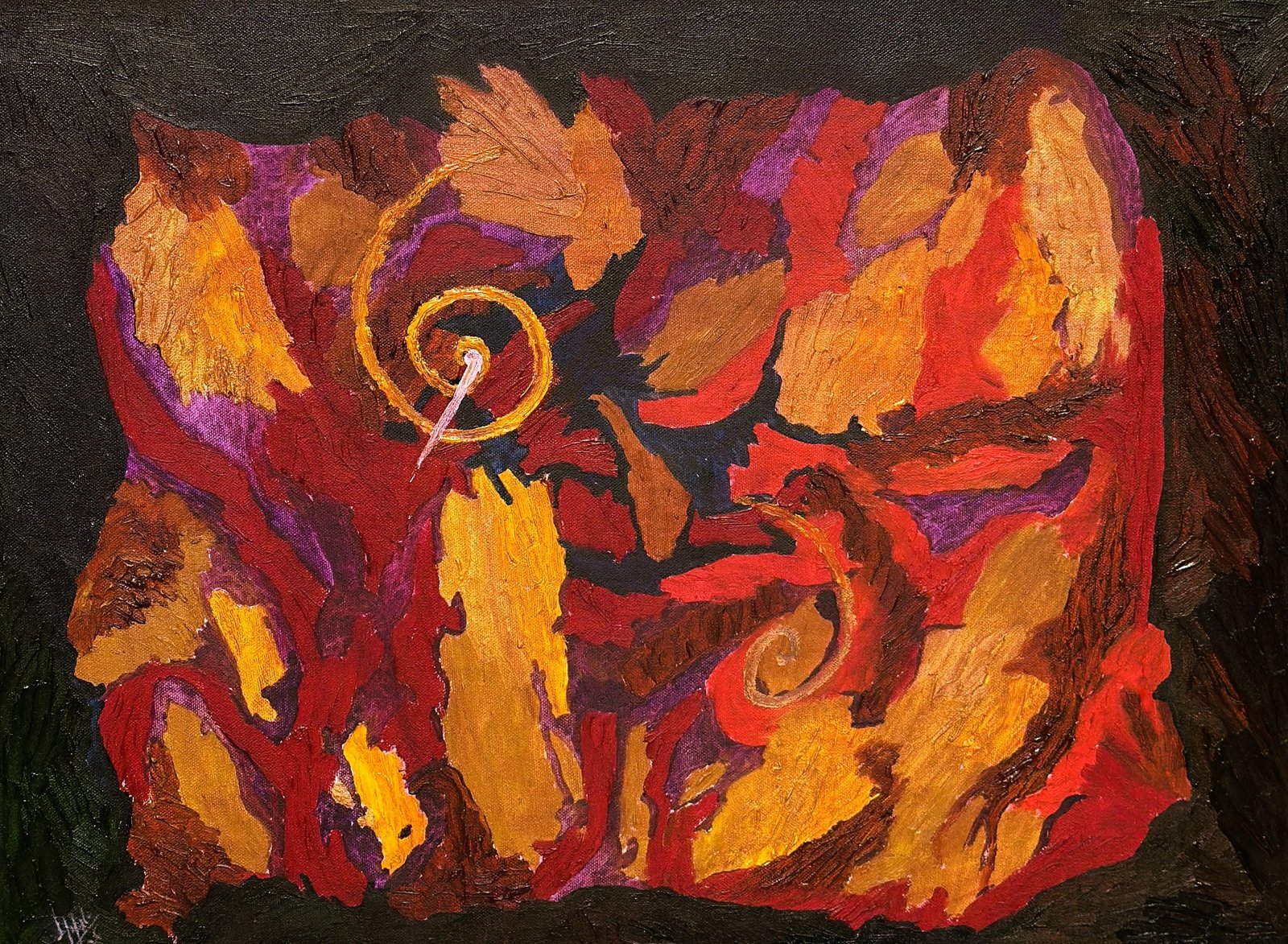
Eternal Whispers
2025 · Oil on canvas · 18 × 24 in
Catalogue record: LE-2026-021 · Listed as collected
A quieter register in which visual atmosphere and layered presence carry the work’s emotional charge.
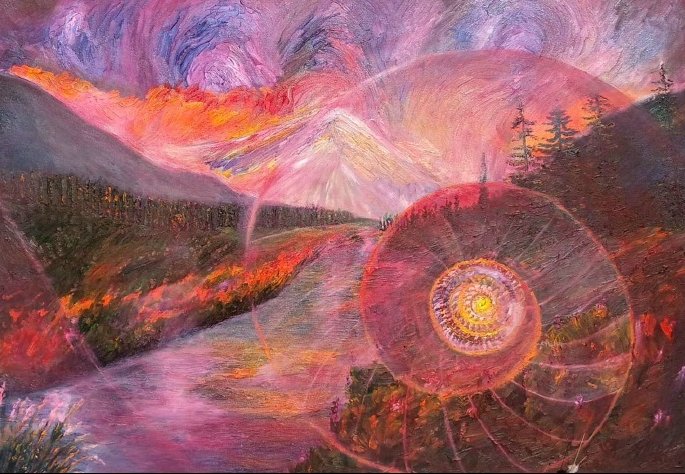
The Nautilus of Threshold
2026 · Oil on canvas · 24 × 36 in
Catalogue record: LE-2026-025 · Listed as collected
The spiral becomes a threshold motif: an image of continuity, passage and the unfolding of form.

Seed of Consciousness
2026 · Oil on canvas · 30 × 30 in
Catalogue record: LE-2026-050 · Listed as collected
A concentrated statement of the current inquiry into origin, awareness and the generative potential of form.
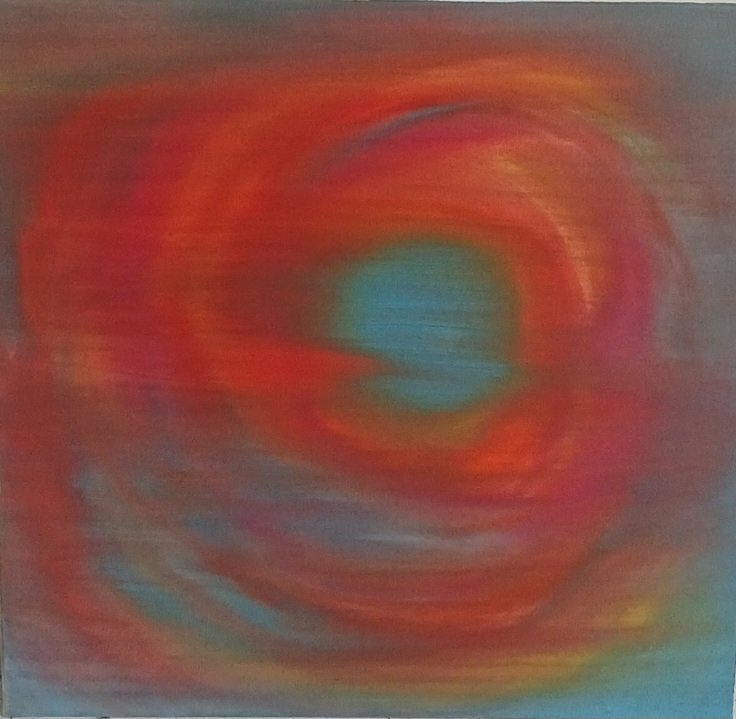
Wheel of Becoming
2026 · Oil on canvas · 30 × 30 in
Catalogue record: LE-2026-051 · Listed as collected
Circular movement and recurrence are brought into dialogue with the idea of transformation.
The selected works are presented as examples of the artist’s recent visual language, not as an availability list. The Catalogue Raisonné currently records these five works as collected. Current availability, ownership and supporting documentation should always be confirmed through the individual artwork record and studio enquiry.
04 / Career context
From the studio into public and institutional space
Alongside the development of the studio practice, Gupta’s archive records commissions and projects that brought art into civic, architectural and organisational settings.
Public and civic work
The artist’s records include sculptural and environmental projects in Daman and Dadra & Nagar Haveli, including a Gandhi sculpture and a waterfall installation at the Circuit House. Project photographs, completion records and commissioning documents should be consulted for the details of each work.
Hindalco, Silvassa
Project documentation records work associated with landscaping, a fountain and a Statue of Liberty installation. The archive should retain the original work authorisation and dated photographic evidence for each component.
Corporate and institutional engagements
The career archive references project-based engagements involving organisations including Croda Chemicals, ONGC, Indian Oil and CPWD, among others. Each project should be described in relation to its specific commissioning or acquisition record.
Cultural and artistic recognition
The archive includes correspondence relating to the artist’s work and a record of a 1999 painting gifted to the Vatican. The nature of each recognition or gift is described according to the supporting document, rather than inferred beyond it.
For institutional and family-office review, the supporting primary documents—commission letters, completion certificates, correspondence, installation photographs and acquisition records—should be made available in a separate evidence schedule. A gift, commission, acquisition, exhibition and letter of acknowledgement are distinct forms of record.
05 / Provenance and stewardship
An artwork is an object, a history and a continuing record
The long-term significance of a work depends not only on its visual and conceptual qualities, but also on the clarity of its identity, authorship, condition and documented history.
The Cultural Exchanges Provenance Standard (CEPS) is being developed as a framework for recording artwork identity, attribution information, supporting evidence and changes in an object’s documented history. It is a documentation framework; a record or digital credential does not, by itself, constitute independent authentication. Its purpose is to make records more legible and researchable over time, while distinguishing verified facts from artist-declared information and unresolved questions.
Evidence before assertion. A provenance record should make clear what is known, how it is known, and what remains to be established.
Identity
Stable title, date, medium, dimensions, image record and unique artwork identifier.
History
Documented ownership, commission, exhibition, publication and transfer records where available.
Condition
Condition reporting and technical examination appropriate to the material, age and circumstances of the work.
Digital credentials and technical validation are recorded according to their actual status. They complement, but do not replace, documentary provenance, expert examination or a work’s physical condition assessment. Provenance entries should identify their source and distinguish confirmed ownership from possible or unverified links.
06 / Pricing and acquisition framework
A considered price, held with consistency.
The studio’s November 2026 artwork price register establishes a consistent reference for the current body of catalogued works. Pricing is treated as part of the artwork’s record—not as a figure that changes casually with each presentation or enquiry.
Frozen reference
The approved Online Sale Price for each of the 104 artworks in the November 2026 register is the fixed reference price for this edition. The register is maintained separately from this artistic trajectory page.
Transparent structure
Catalog pricing, studio cost allocations, insurance, partner margins and other commercial components are maintained as distinct calculations. A change to an internal calculation does not silently alter the frozen Online Sale Price.
Controlled revision
Any future change to an artwork’s approved price requires an expressly authorised revision and a dated record. Historical price editions should remain identifiable rather than being overwritten.
The November 2026 register is the current pricing reference. This page is an interpretive account of the artist’s development; the individual catalogue record remains the authoritative place to confirm an artwork’s identity, availability, price and supporting documentation.
A listed price is a current studio offer, not a promise of future appreciation, investment return or guaranteed resale value. Availability and transaction terms are confirmed individually at the time of enquiry.
07 / Continuing direction
Studio Ananta as a living artistic archive
The next phase brings the studio, the catalogue and the wider cultural platform into closer dialogue.
Future work will continue to explore immersive environments, sculptural abstraction, chronometric painting, philosophical writing and rigorous artwork documentation. Studio Ananta is conceived as a place where artworks, research, process and interpretation can be encountered as connected parts of a sustained practice.
This trajectory is an evolving record, refined as works are completed and historical material is catalogued. It is intended as a clear point of entry for collectors, curators and researchers: a way to understand the artist’s development, examine the works, and follow the documentary history that accompanies them.